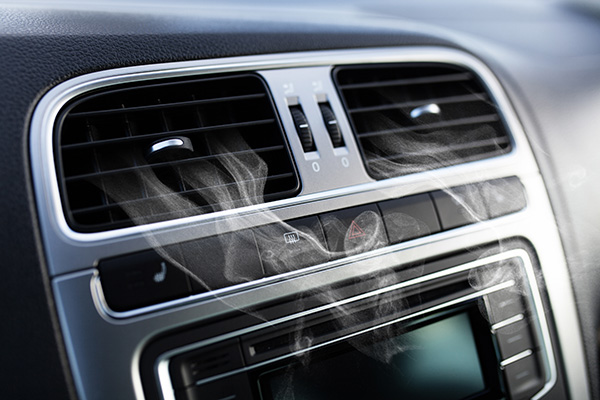
A burning odor coming through your car’s air vents usually means something under the hood is heating up, leaking, or rubbing where it should not. Drivers often notice it at a stoplight, after parking, or during a longer drive when the engine bay has had time to build heat. The smell may fade after a few minutes, which is exactly why people tend to put it off.
That odor usually starts outside the cabin and is pulled in through the ventilation system.
Why You Smell It Through The Vents
Your HVAC system draws outside air in from the area near the base of the windshield. If something in the engine bay produces a strong odor, that smell can quickly move into the cabin through the fresh-air intake. In many cases, the issue is not inside the dashboard at all. It is under the hood, just close enough to the vent intake to make the whole cabin smell like the problem.
This is why the timing matters. If the odor gets stronger when the car is idling, parked after a drive, or sitting in traffic, heat buildup under the hood is usually part of the story. The engine bay is hotter, airflow is lower, and the smell has more time to rise into the vent area.
Oil Leaks Are A Very Common Cause
Burning oil is one of the most common reasons drivers smell something hot through the vents. A small valve cover leak, oil filter housing leak, or another upper-engine leak can drip onto the exhaust manifold or another hot surface. Once that happens, the oil starts burning off and sends a sharp, heavy odor into the air intake area.
This type of leak often stays hidden at first because it may not leave much on the ground. The car still drives normally, and the only real clue is that smell when the engine gets hot. That is why an inspection matters early. A small oil leak is much easier to handle before it spreads onto nearby hoses, belts, or wiring.
Coolant Can Create A Strong Vent Smell Too
Coolant has its own distinct smell, and many drivers describe it as sweet, chemical-like, or strangely hot. If coolant is leaking from a hose, heater hose connection, or another cooling system part near the firewall, that odor can be pulled into the cabin fast. Sometimes it is most noticeable right after startup. Other times, it gets stronger after the engine is fully warm.
This kind of smell deserves attention because coolant loss directly increases the risk of overheating. What begins as an odor through the vents can turn into a rising temperature gauge and a much bigger repair if the leak keeps getting worse.
What The Type Of Smell Usually Suggests
The smell itself can help narrow down the cause before the car even comes in.
- Burning oil usually smells heavy, sharp, and smoky.
- Coolant smells sweeter and more chemical.
- An electrical problem smells harsher, more like hot plastic or insulation.
- A slipping belt often smells like hot rubber.
These clues are useful because they point the inspection in the right direction. They do not replace testing, though they do help separate a fluid leak from a belt or wiring issue much faster.
Electrical Problems Need To Be Taken Seriously
If the odor smells like burnt plastic or hot wiring, the car needs to be checked sooner rather than later. Electrical resistance creates heat, and heat damages connectors, wiring, and components very quickly once it starts building. A blower motor issue, a resistor problem, a failing connection, or a damaged wire can all create an odor that travels straight through the vents.
This is one of the few odor complaints that should make drivers especially cautious. Oil and coolant leaks are serious, but electrical heat can move from a strange smell to a failed component in a hurry. If the odor is sharp, synthetic, or unusually harsh, the source should be found quickly.
It Is Not Always A Fluid Leak
Sometimes the cause is simpler but still worth fixing. Leaves, road debris, or bits of insulation can get trapped near hot engine parts, creating a burnt smell as temperatures rise. A slipping serpentine belt can do the same thing, especially if it is worn, contaminated, or losing tension. In those cases, the odor may come and go depending on moisture, engine load, or outside temperature.
That is one reason these complaints should be checked as a system instead of being guessed at from smell alone. The odor is real, but the source isn't always obvious without a close look at the engine bay.
Why Waiting Usually Makes It More Expensive
Burning odors rarely stay harmless. Oil leaks spread. Coolant leaks lower the system’s reserve. Electrical heat damages more than one connection. Belts get louder, weaker, and eventually fail. What seems like a strange smell today often becomes a much clearer repair a few weeks later, only with more parts involved.
During regular maintenance, these early signs are much easier to catch before they turn into smoke, overheating, or a no-start problem. That is why it pays to deal with the smell while it is still just a warning.
Get Vehicle Diagnostics and Repair In Olympia, WA, With Olympic Transmissions & Auto Care
If a burning odor has started coming through your car’s air vents, Olympic Transmissions & Auto Care in Olympia, WA, can perform an inspection to find the source and fix it before a small leak, belt issue, or electrical problem turns into a larger repair.
Bring it in while that smell is still an early clue and not a much more serious underhood problem.