An engine misfire has a way of making the whole car feel irritated. The idle shakes, the exhaust note changes, the check engine light comes on, or the car stumbles when you press the gas.
The hard part is that three different problems can feel almost the same from the driver’s seat.
A bad fuel injector, worn spark plugs, and weak ignition coils can all cause one cylinder to stop firing properly. The repair depends on which part is actually failing, so guessing can get expensive fast.
What An Engine Misfire Means
A misfire means that one cylinder is not burning the air-fuel mixture correctly. That cylinder might skip completely, fire weakly, or only act up under load. The engine loses its rhythm, and that is what you feel as shaking, hesitation, or rough running.
Some misfires are obvious at idle. Others show up only when merging, climbing a hill, or driving with the A/C on. A flashing check engine light is more urgent because unburned fuel can enter the exhaust and overheat the catalytic converter.
That is why a misfire should be checked soon, even if the car still drives.
When Spark Plugs Are The Problem
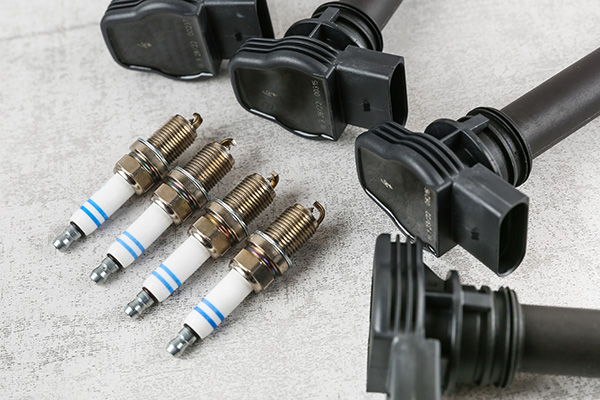
Spark plugs ignite the air-fuel mixture in each cylinder. As they wear, the gap grows, and the spark gets weaker. The engine might still run, but it has to work harder to fire cleanly.
Worn spark plugs often cause rough starts, poor fuel economy, hesitation, or a light shake at idle. Under load, the problem can get worse because the spark has to jump the gap under higher cylinder pressure.
A spark plug can also tell a story when it is removed. Oil on the plug, fuel soaking, heavy carbon, or a worn electrode all point in different directions. We look closely at the plug condition because it can show whether the plug itself failed or another problem damaged it.
When Ignition Coils Are The Problem
Ignition coils create the high voltage that the spark plugs need. Many modern vehicles use one coil per cylinder. When a coil weakens, a misfire may appear on that specific cylinder.
Coil problems can be tricky because they sometimes come and go. A coil might work fine when cold, then fail once heat builds under the hood. It might also act up only during acceleration, when the engine needs a stronger spark.
One common test is moving the suspect coil to another cylinder. If the misfire moves with the coil, that is useful evidence. If the misfire stays on the same cylinder, the cause may be the spark plug, injector, wiring, compression, or another issue.
When A Fuel Injector Is The Problem
A fuel injector sprays fuel into the engine. If it clogs, leaks, sticks, or fails electrically, that cylinder may get too little fuel, too much fuel, or fuel at the wrong moment.
A clogged injector can cause a lean misfire, hesitation, rough idle, or weak acceleration. A leaking injector can flood a cylinder, cause hard starts, create a fuel smell, or foul a spark plug. In some cases, the oil can even smell like fuel if the problem is severe enough.
Fuel injector issues need careful testing. The symptoms can look like ignition trouble, but replacing plugs and coils will not fix a cylinder that is not getting the right fuel delivery.
Why The Code Is Only A Starting Point
A scan tool might show a misfire on cylinder 2, but it does not automatically explain why cylinder 2 is misfiring. The code points us toward the cylinder. The testing tells us the cause.
Our technicians may check misfire counts, spark plug condition, coil output, injector pulse, fuel pressure, vacuum leaks, compression, and wiring. The exact path depends on the symptom and the data.
This is where a proper inspection matters. A cylinder misfire can come from spark, fuel, air, compression, or control issues. The dashboard light warns, but the engine still needs to be tested in the correct order.
Why Misfires Should Not Wait
A misfire while driving can make a small repair more expensive. A weak spark plug can stress an ignition coil. A bad coil can cause unburned fuel to enter the exhaust. A leaking injector can wash fuel past the cylinder walls or damage the catalytic converter.
Regular maintenance helps prevent misfires, especially when spark plugs, filters, and fuel system issues are addressed before symptoms become obvious. It does not prevent every failure, but it gives the engine fewer reasons to stumble.
If the car shakes, hesitates, smells like fuel, runs rough, or the check engine light flashes, do not keep driving it as if nothing has changed.
Get Engine Misfire Service In Olympia, WA, With Olympic Transmissions & Auto Care
If your vehicle has a misfire, rough idle, hesitation, fuel smell, or flashing check engine light, Olympic Transmissions & Auto Care in Olympia, WA, can test the spark plugs, ignition coils, fuel injectors, and related systems.
Schedule a visit and find the real cause before a simple misfire turns into a more expensive repair.